

NBAA Federal Excise Taxes Guide
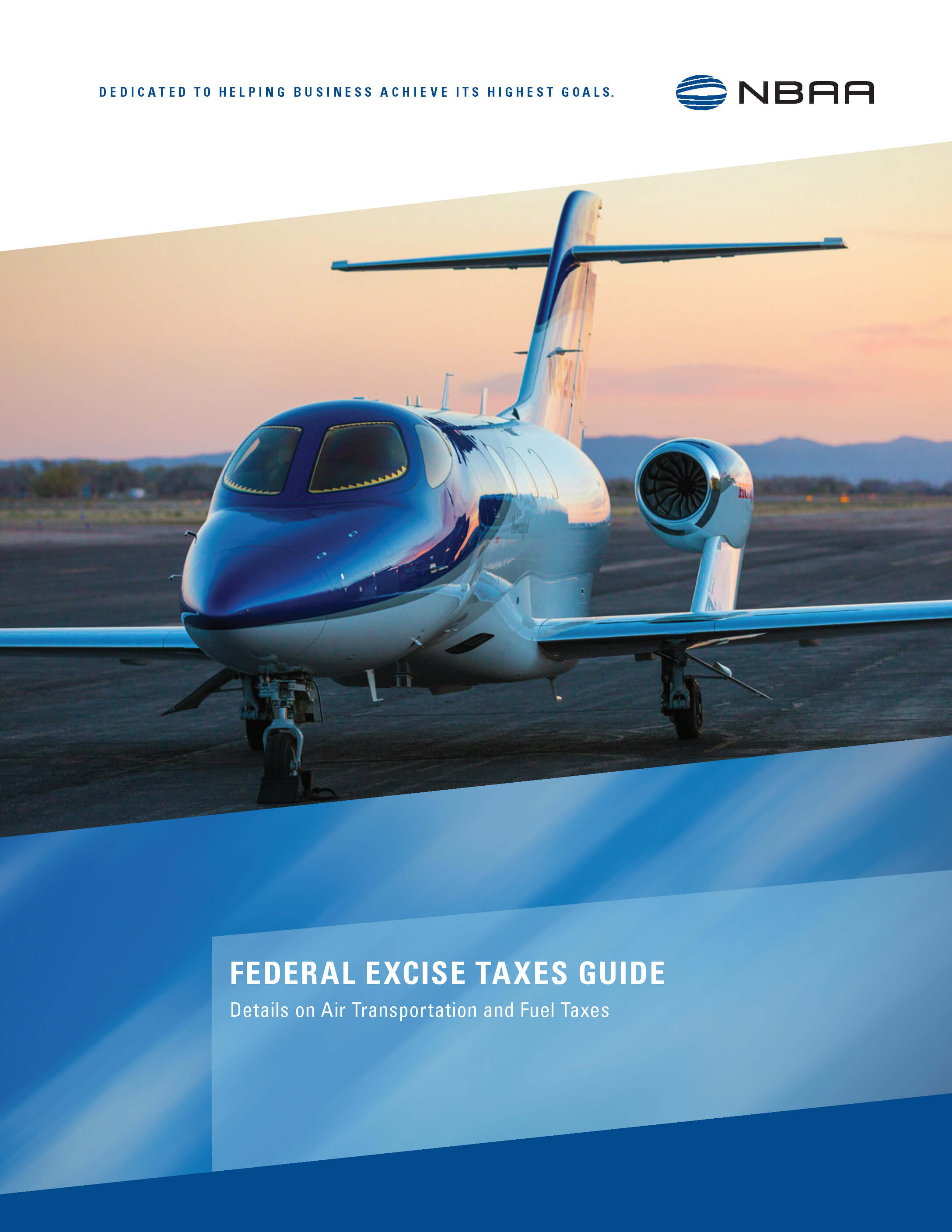
Updated in December 2023 to reflect the tax rates for calendar year 2024, the NBAA Federal Excise Taxes Guide provides the latest information on how federal excise taxes (FET) apply to business aircraft activity. The guide includes details on how FET applies to commercial air transportation of passengers, including the percentage tax on domestic travel and related exceptions and exclusions, domestic segment fees, and the head tax on international transportation.
Key concepts including possession, command and control; available FET exemptions; and charter broker obligations for air transportation excise taxes are explained in the context of business aircraft operations. Rules on FET are constantly evolving and the guide includes updates on topics such as FET on fractional aircraft ownership program operations and IRS legal interpretations regarding aircraft service and pilot service agreements.
The Federal Excise Taxes Guide is a comprehensive but concise reference that provides NBAA members with summary information about the applicability of excise taxes to common business aircraft operations and scenarios.
Download the NBAA Federal Excise Taxes Guide
FET Resources
- Federal Excise Tax FAQs
- IRS Final Regulations on Federal Excise Tax Exception For Aircraft Management Services
- Amendment to Tax Regulations Imposes FET on Single Member LLCs (705 KB, PDF)
- Uninterrupted International Air Transportation – Which Legs of My International Trip are Subject to the 7.5% FET?
- When are Commercial Transportation Taxes Due for Part 91 Flights?
- Amendment to Tax Regulations Creates Federal Transportation Excise Tax Risks for Single Member LLCs
- New Federal Excise Tax Liabilities for Whole Aircraft Operations Under FAR Part 91 and for Fractional Ownership
- Federal Excise Taxes: The Regular Method Vs. the Alternative Method
- Aviation Fuel Taxes for Flight Departments: Understanding Fuel Taxes, Refunds and Credits
- Fuel Fraud Update: Fuel Vendors Must Register With IRS to Ensure Funding of FAA Trust Fund
- Credit for Fuel Used in Foreign Trade
- Explanation of Non-Aircraft Use of Jet Fuel
Selected IRS FET Publications
- IRS Publication 510 (Revised July 2012)
- IRS Air Transportation Excise Tax Audit Technique Guide
- DOT Rural Airports List for Federal Excise Tax Purposes
- IRS Technical Advice Memorandum 200122006: Federal Excise Tax Segment Fees
- IRS Technical Advice Memorandum 200123002: Affiliated Group
- IRS Revenue Ruling 2002-50: Foreign Trade
- IRS Revenue Ruling 68-256: Demonstration Flights

 International Business Aviation Council Ltd.